Glendale landscapes ask for a different kind of design discipline than yards in wetter climates. The city has mild winters, hot summers, foothill conditions in many neighborhoods, and a strong local emphasis on water wise landscaping. A yard that looks lush in March can become thirsty and high maintenance by August if the hardscape, soil, plants, and irrigation systems were not planned as one working system.
Hardscaping is often misunderstood as the “non-plant” part of a yard: patios, paths, gravel, boulders, edging, walls, and stone accents. That definition is technically useful, but it misses the bigger point. In Glendale, hardscaping is what makes low maintenance landscaping possible. It controls how water moves. It protects soil from baking. It reduces the amount of turf that needs mowing and weekly care. It creates access for maintenance without compacting planting areas. It gives drought tolerant landscaping a clean, intentional structure instead of making a yard look unfinished or stripped down.
Mulch and stone are two of the most practical hardscape materials for Glendale homeowners. Used well, they can reduce outdoor watering needs, improve the appearance of both front yard landscaping and backyard landscaping, and help support California-friendly plants. Used poorly, they can create heat, runoff, plant stress, and years of annoying maintenance. The difference comes down to planning, soil preparation, material selection, and restraint.
Why hardscaping matters so much in Glendale
Glendale Water & Power has emphasized that a significant amount of the city’s potable water is used for landscaping, which makes outdoor conservation a major local priority. That reality affects everyday landscape design. A yard that relies heavily on conventional lawn care, frequent overhead irrigation, and water-hungry plant selection works against the climate and against the direction local guidance has been pointing for years.
The city encourages California-friendly and California native plants because they suit Glendale’s mild winters and hot summers. These plants can reduce outdoor watering, water bills, pesticide use, and routine landscape maintenance when they are matched to the site. Glendale also promotes replacing turf with water-efficient plants and notes that turf needs weekly care. That matters for anyone considering landscape renovation, because the biggest maintenance burden in many yards is not the shrubs or the mulch. It is the lawn.
Hardscape helps make turf reduction feel like an upgrade rather than a sacrifice. A decomposed granite path through a planting area, a band of decorative rock along a driveway, or Hardscaping glendale ridgelineoutdoorliving.com a shaded seating pad in the backyard can replace square footage that once required irrigation, mowing, edging, and seasonal repair. The result can be a landscape that uses water more carefully and still feels complete.
There is also a permeability issue. Glendale’s guidance for single-family areas calls for landscaping that is native or drought-tolerant and for site design that maximizes water permeability by reducing paved areas. That does not mean every surface must be soft or planted. It means the hardscape should be selected and installed with water movement in mind. Gravel landscaping, mulch basins, and permeable paths can support that goal more effectively than broad, sealed surfaces that push water away too quickly.
Mulch and stone are not interchangeable
Mulch and stone both cover soil, suppress weeds to some degree, and create visual order. Beyond that, they behave very differently.
Organic mulch, such as bark or wood-based mulch, is usually the better choice around many planting beds because it moderates soil temperature and helps conserve moisture. It also breaks down over time, which means it becomes part of the soil system. That is an advantage for plant health, but it also means mulch needs periodic replenishment. In a low maintenance landscaping plan, “low maintenance” does not mean “no maintenance.” It means the maintenance is predictable, seasonal, and manageable.
Decorative rock and gravel have a different personality. They last longer, stay put better on some flat areas, and provide a crisp visual style that works well in modern landscaping. They are useful in pathways, utility zones, side yards, drainage-minded areas, and places where foot traffic would kick organic mulch around. They can also be beautiful around boulders, agaves, sages, or other drought tolerant plants when the composition is balanced.
The problem comes when stone is treated as a universal mulch. Rock can absorb and radiate heat, especially in exposed areas during hot Glendale summers. Some plants tolerate that reflected heat, while others struggle. A wide field of pale gravel may look clean on installation day, but without enough plant canopy or thoughtful placement it can feel harsh. A wide field of dark rock may look dramatic, but it can become hot. The best garden design usually uses stone where its durability and structure matter, then uses organic mulch where plant comfort and soil improvement matter more.
I have seen front yards transformed by removing tired turf and replacing it with drought tolerant landscaping, only to lose some of the benefit because the entire yard was covered in rock with plants spaced too far apart. At first the yard looked tidy. A year later, the plants were still small, the gravel was collecting leaf litter, and the space felt hotter than it needed to be. The better approach would have been a layered design: gravel for paths and accent zones, organic mulch in planting areas, and plants placed with mature size in mind so they could eventually shade portions of the ground.
Start with landscape planning, not materials
A common mistake in landscape renovation is choosing the surface material first. Homeowners fall in love with a gravel color or a smooth river stone, then try to make the yard fit the material. Good landscape planning starts with use, water, sun, soil, and maintenance tolerance.
In Glendale, a front yard often needs curb appeal, simple access to the entry, and a planting scheme that looks cared for with modest watering. A backyard may need seating, shade, pet access, privacy, or room for children. A small yard landscaping project may need every square foot to serve more than one purpose. Hardscape decisions should follow those needs.

Before selecting mulch or stone, walk the property at different times of day. Notice where the landscaping Glendale ridgelineoutdoorliving.com afternoon sun hits hardest. Watch where irrigation overspray lands. Look for compacted soil near gates, trash bin routes, or side yard passages. Identify areas where turf is only decorative and areas where lawn still serves a real function. That distinction is important. Sometimes artificial turf or synthetic grass is discussed as a lower-maintenance alternative to natural grass, but it is still a surface choice that needs careful consideration in heat, drainage, use, and aesthetics. In other situations, sod installation may make sense for a small functional lawn area, but not for broad ornamental turf that exists only because it has always been there.
The goal is not to ban lawn everywhere. The goal is to stop spending water and labor on lawn that does not earn its keep.
A practical framework for choosing mulch, gravel, and stone
Most Glendale yards benefit from a mix of materials rather than a single groundcover. The right combination depends on slope, exposure, plant palette, and how people move through the space. A simple framework can prevent expensive second-guessing later.
Use organic mulch in planted beds where soil moisture, root protection, and long-term soil improvement matter. Use gravel or decomposed stone for paths, side yards, utility access, and modern landscaping accents. Use larger decorative rock or boulders sparingly, as structure and focal points rather than blanket coverage. Keep highly reflective or heat-retaining stone away from sensitive plants unless the plant selection can tolerate it. Preserve permeability wherever possible by favoring planted areas, mulch, gravel, and permeable surfaces over unnecessary paving.This framework is intentionally conservative. It reflects what tends to last. Dramatic hardscape installations can photograph beautifully, but the best low maintenance landscaping is usually quieter. It looks good after wind, summer heat, irrigation adjustments, and a few years of plant growth.
Soil preparation still matters under mulch and stone
Hardscape can hide soil, but it cannot fix bad soil by itself. Soil preparation is the step that separates a durable landscape from a cosmetic one.
When replacing turf, it is tempting to remove the grass, roll out fabric, dump rock, and call the project finished. That approach often creates problems. Compacted soil remains compacted. Irrigation may no longer match the new plant layout. Water can run across the surface instead of soaking where roots need it. Weeds may appear along seams, edges, and windblown pockets of organic debris. Plants installed into small holes surrounded by compacted ground may survive, but they rarely thrive.
A better process starts by understanding the future planting zones. Soil should be loosened where new plants will root. Existing irrigation systems should be checked for leaks, because local water-saving guidance specifically calls out leak checks as a practical conservation step. Spray irrigation that once served turf may need to be converted or redesigned for drip irrigation, which Glendale includes among its water-saving tips. Mulch can then be placed in a way that protects the soil surface, with care not to bury plant crowns.
For stone areas, preparation depends on use. A decorative gravel bed around plants is different from a path that receives daily foot traffic. Paths typically need better grading, edging, and base preparation than planting areas. If the path is too loose or too deep, it becomes difficult to walk on. If it is too shallow or poorly edged, the gravel migrates into planting beds. These are not glamorous details, but they determine whether the yard feels finished after the first season.
Water wise landscaping and irrigation in a hardscaped yard
A common misunderstanding about xeriscaping is that it means no irrigation. In Glendale, water wise landscaping is better understood as using the right amount of water in the right place. New plants need establishment water. Even native California plants need thoughtful watering while they develop roots. Glendale’s turf-replacement guidance notes that native plants can survive drought with about 20 gallons of water per month, which underscores the point that drought-tolerant does not mean water-free.
Drip irrigation often pairs well with mulch because it delivers water near the root zone and reduces waste from overspray. This is especially useful when a former lawn becomes a mixed planting area. Instead of watering a broad rectangle, the system can water individual plants or hydrozones with similar needs. That kind of landscape planning reduces stress on plants and avoids watering gravel for no reason.
Timing matters too. Glendale’s water-saving tips recommend watering before 9 a.m. Or after 6 p.m., and watering landscape only one day a week in winter. These guidelines reinforce the need for seasonal adjustment. A controller that runs the same schedule in January and July is almost always wrong. Low maintenance landscaping depends on attention at key moments, not constant fussing. A few careful irrigation adjustments each year can prevent plant loss, runoff, and waste.
Rain barrels can also play a supporting role. Glendale encourages rainwater use through rain barrels as a way to conserve water for gardens and trees. A rain barrel will not irrigate an entire landscape through a hot summer, but it can help water priority plants, new plantings, or container gardens. In a hardscaped yard, the best rainwater thinking starts with where water falls, where it can be stored, and where it can soak into planted areas rather than rush away.
Front yard landscaping that looks intentional, not sparse
A front yard has to do several jobs at once. It represents the home, respects the neighborhood, and handles heat, foot traffic, utilities, and visibility. In Glendale, a successful front yard landscaping plan often reduces turf, adds drought tolerant plants, and uses hardscape to create clean lines.
The biggest risk is underplanting. Homeowners sometimes remove a lawn and install a few small shrubs in a large field of mulch or gravel. The yard may technically be water wise, but it can look unfinished for years. Good plant selection accounts for mature size, seasonal interest, and spacing that allows the landscape to fill in without becoming overcrowded. California-friendly plants and native California plants are well suited to Glendale’s climate, and the city’s own guidance supports their use for reducing watering and maintenance.
Hardscape should guide the eye. A path to the entry should feel obvious. A gravel band near the sidewalk can create a neat edge. A boulder placed at a grade change can look natural if it is partially set into the ground rather than perched on top. Mulch around planting masses can visually recede, allowing the plants to carry the design.
For modern landscaping, restraint is especially important. Clean geometry works best when the installation is precise. Edging must be straight or intentionally curved. Gravel color should coordinate with the home’s exterior rather than compete with it. Plant forms should be repeated enough to create rhythm. A modern yard with too many rock colors, too many plant types, and too many border materials quickly becomes busy.
Backyard landscaping for daily use
Backyard landscaping has more freedom than the front yard, but it also sees more real-life wear. Dogs run paths along fences. Children cut corners. Patio chairs scrape surfaces. Garden hoses drag across edges. A low maintenance backyard has to anticipate habits rather than fight them.
Mulch works well in planted areas, especially around trees, shrubs, and water-efficient plants. Gravel works better where people walk regularly, provided it is installed at a comfortable depth with stable edging. Larger stone can define transitions between a seating area and a garden bed. If a backyard has a small lawn, it should have a clear purpose. A compact patch of sod for play or pets may justify the lawn care. A leftover strip that is hard to irrigate and awkward to mow probably does not.
Artificial turf and synthetic grass often enter the conversation for backyards because they promise a green look without traditional mowing. They can solve certain use problems, but they are not the same as living turf, mulch, or planting. They should be evaluated as part of the whole landscape design, including drainage, heat exposure, adjacent planting, and long-term maintenance expectations. For some properties, a combination of permeable hardscape, mulch, and drought tolerant planting creates a more climate-appropriate result than replacing one broad green Landscape community guide surface with another.
Outdoor living areas also need shade and comfort. Stone patios and gravel zones can be practical, but they should not dominate every sunny corner. Plant canopy, pergolas, or carefully placed trees can make hardscaped areas more usable. In Glendale’s hot summers, comfort is not a luxury detail. It determines whether the space gets used.
Small yard landscaping: every edge counts
Small yard landscaping is unforgiving. A material choice that looks subtle in a large yard can feel loud in a courtyard or narrow side yard. Scale matters. Fine gravel may suit a compact path better than oversized rock. A simple mulch field with three well-chosen plant species may look calmer than a crowded mix of textures.
In small spaces, hardscape often provides the main structure. A narrow path, a landscapers and gardeners Glendale CA small seating pad, or a gravel utility strip can make the area easier to use. But permeability still matters. Replacing the entire yard with paving may reduce plant maintenance, but it can also work against Glendale’s guidance to maximize water permeability by reducing paved areas. A better solution may combine a small paved or stabilized seating area with planted edges, mulch, and gravel that allows water to move into the ground.
Plant selection should be disciplined. Choose plants for mature size, not nursery size. A one-gallon plant can look harmless at purchase and become a maintenance headache if it wants more room than the yard can give. Low maintenance landscaping in small spaces usually comes from fewer, better choices.
Mulching details that affect long-term maintenance
Mulching looks simple, but small mistakes show up later. Too little mulch fails to protect soil. Too much mulch can smother plant crowns or create a soggy layer against stems. Mulch piled against trunks and stems is especially problematic. The material should cover the soil, not bury the plant.
Edges matter as much as depth. Mulch next to a driveway, sidewalk, or path needs a defined boundary or enough setback to prevent spillover. Wind exposure also matters. Lightweight mulch may move in exposed front yards or slopes. In those cases, a different mulch texture, a planted ground layer, or a transition to gravel in the most exposed strip may perform better.
Mulch also changes appearance as it ages. Fresh mulch can look bold, then soften after sun exposure. That is normal. A maintenance plan should include periodic topdressing rather than waiting until the soil is bare. The frequency depends on mulch type, sun, slope, irrigation, and cleanup habits, so it is better to inspect seasonally than to follow a rigid calendar.
Decorative rock and gravel landscaping without the common regrets
Decorative rock lasts, which is both its advantage and its warning. If the color, size, or placement is wrong, the mistake stays visible. Before covering a large area, test the material on site. Look at it in morning light, afternoon sun, and next to the home’s exterior. A rock that looked warm at the supplier may look orange against a stucco wall. A bright gravel may glare in full sun. A dark stone may feel heavier than expected.
Weed fabric is another area that requires judgment. It may help separate stone from soil in some applications, but it is not a permanent weed solution. Dust, leaves, and organic matter settle into gravel over time, creating places for weeds to germinate above the fabric. Fabric can also complicate future planting changes. In planting beds, many professionals prefer building healthier soil, using appropriate mulch, and maintaining the area rather than relying on fabric as a cure-all.
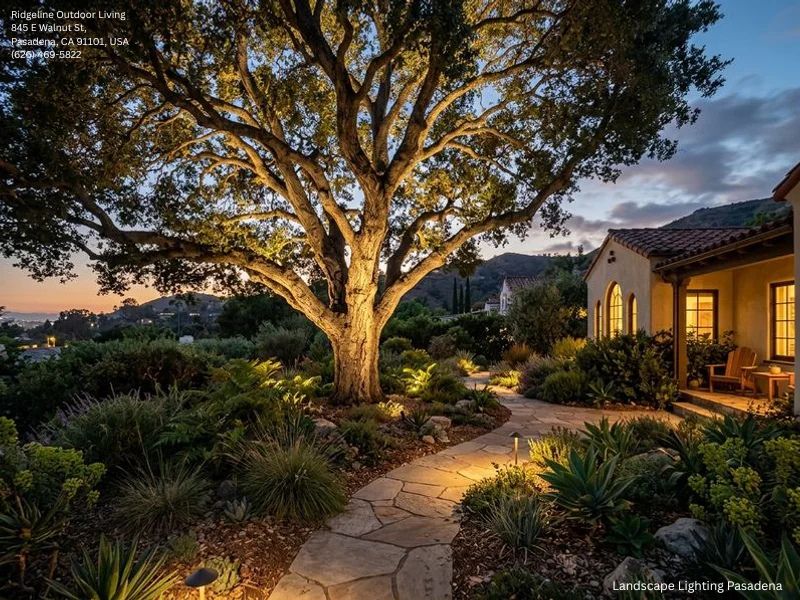
Gravel depth should match the purpose. Too much loose gravel makes walking uncomfortable and can trap chair legs. Too little exposes the base and looks patchy. Edging should be selected with the same care as the gravel itself. Metal, concrete, stone, or other borders each create a different look. The border is not just decoration. It keeps materials where they belong and reduces cleanup.
Landscape maintenance tips for a low-work yard
The most successful low maintenance yards still receive regular observation. The difference is that the work is lighter and more strategic than conventional lawn-centered maintenance. Instead of weekly mowing and constant irrigation correction, the focus shifts to seasonal pruning, irrigation checks, mulch renewal, and weed removal before weeds mature.
A practical maintenance rhythm for Glendale landscapes might look like this:
Check irrigation systems for leaks and clogged drip emitters before hot weather intensifies. Refresh mulch where soil is exposed, keeping material away from plant crowns and trunks. Remove weeds while they are small, especially in gravel where roots can anchor under stone. Adjust watering schedules seasonally, with special attention to winter reductions. Prune drought tolerant and native plants according to their growth habit rather than shearing everything into the same shape.This kind of maintenance protects the original investment. It also keeps the landscape from drifting into the two extremes common in low-water yards: either too wild for the setting or too sterile to support healthy plants.
When landscape renovation should happen in phases
Not every yard needs to be renovated all at once. Phasing can be a smart approach, especially when the existing landscape has mature trees, drainage questions, or a large lawn area. Start with the zones that waste the most water or cause the most maintenance frustration. A front lawn that receives little use may be an obvious first phase. A side yard with failing grass and overspray may be another.
Phasing also allows homeowners to learn from the site. After replacing one turf area with mulch, decorative rock, and water-efficient plants, you can observe how the plants respond, how much weed pressure appears, and whether the irrigation layout works. Those lessons improve the next phase. Landscape planning is not only a drawing exercise. It is a process of matching design intent to actual conditions.
For hillside or foothill properties, judgment becomes even more important. Glendale public materials emphasize native plants and reduced watering in foothill and fire-prone areas, aligning landscape choices with slope and fire conditions. Hardscape on slopes must be handled carefully because water movement, erosion, access, and plant establishment all become more sensitive. Broad assumptions are risky. A slope that looks stable in dry weather may behave differently during rain. A planting plan that works on flat ground may not suit a hillside exposure.
The role of local examples and demonstration gardens
One of the most useful ways to refine landscaping ideas is to look at local examples, not just online images from other climates. Glendale has a drought-tolerant demonstration garden at the Downtown Central Library that showcases water-wise plants and low-water irrigation techniques. Spaces like that help homeowners see plant form, spacing, texture, and hardscape relationships in a climate-relevant setting.
Photos can mislead because they capture landscapes at a single moment, often right after installation or at peak bloom. A local demonstration garden offers a more grounded reference. You can see how California-friendly and native plants hold space, how mulch and stone support the design, and how water-wise choices can still feel attractive and cared for.
When gathering ideas, pay attention to what you like after the first impression. Is it the plant color, the path shape, the gravel texture, or the contrast between soft foliage and stone? Good landscape design often comes from identifying the underlying relationship rather than copying the exact materials.
Balancing beauty, water savings, and maintenance
The best hardscaping in Glendale does not treat conservation as a punishment. It uses conservation as a design parameter. That mindset produces better landscapes. A yard can reduce outdoor watering and maintenance while becoming more interesting than the lawn it replaced. Mulch can make planting areas healthier and calmer. Stone can create durable paths and crisp structure. Native California plants and other drought tolerant selections can bring seasonal change, habitat value, and a sense of place.
There are trade-offs. Organic mulch needs replenishment. Gravel needs occasional cleaning and weed control. Drip irrigation needs inspection. Drought tolerant plants need establishment water and thoughtful pruning. Artificial turf may reduce mowing but requires its own evaluation. Sod installation may still be appropriate in limited functional areas. No material eliminates responsibility, and any product sold as maintenance-free deserves skepticism.
A durable Glendale landscape comes from assembling the pieces honestly. Reduce unnecessary turf. Keep water permeable where possible. Use mulch where plants and soil benefit from it. Use decorative rock where durability, access, and visual structure matter. Select plants for the climate, the soil, and the mature size. Check irrigation systems before small problems become expensive ones. Water at appropriate times and adjust seasonally.
Hardscape is the skeleton of the garden, but it should never be the whole body. In a well-planned Glendale yard, stone and mulch support the living landscape. They make it easier to care for, easier to water responsibly, and easier to enjoy through hot summers and mild winters. That is the real promise of low maintenance landscaping: not a yard that asks for nothing, but a yard where every hour of care and every gallon of water has a clear purpose.